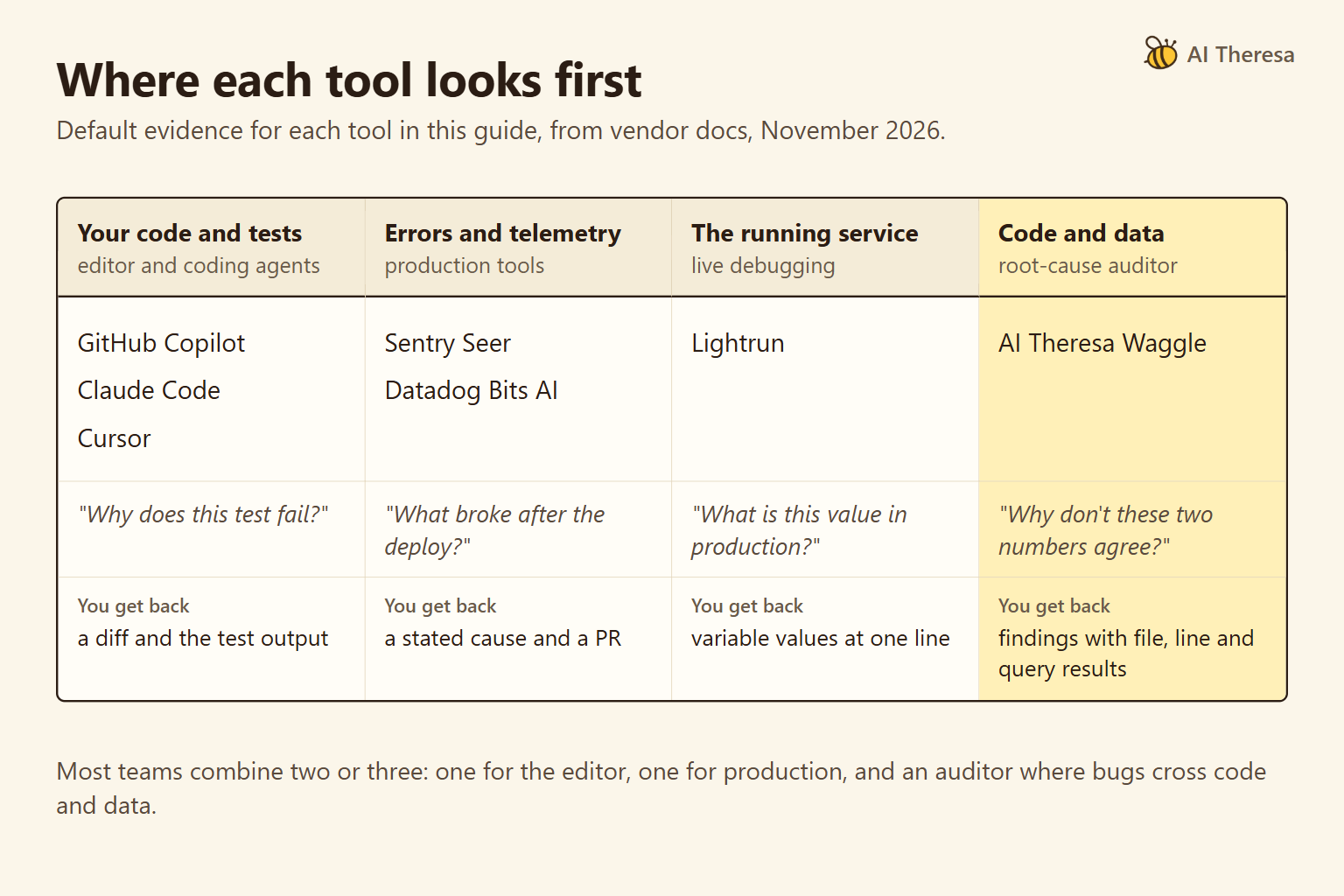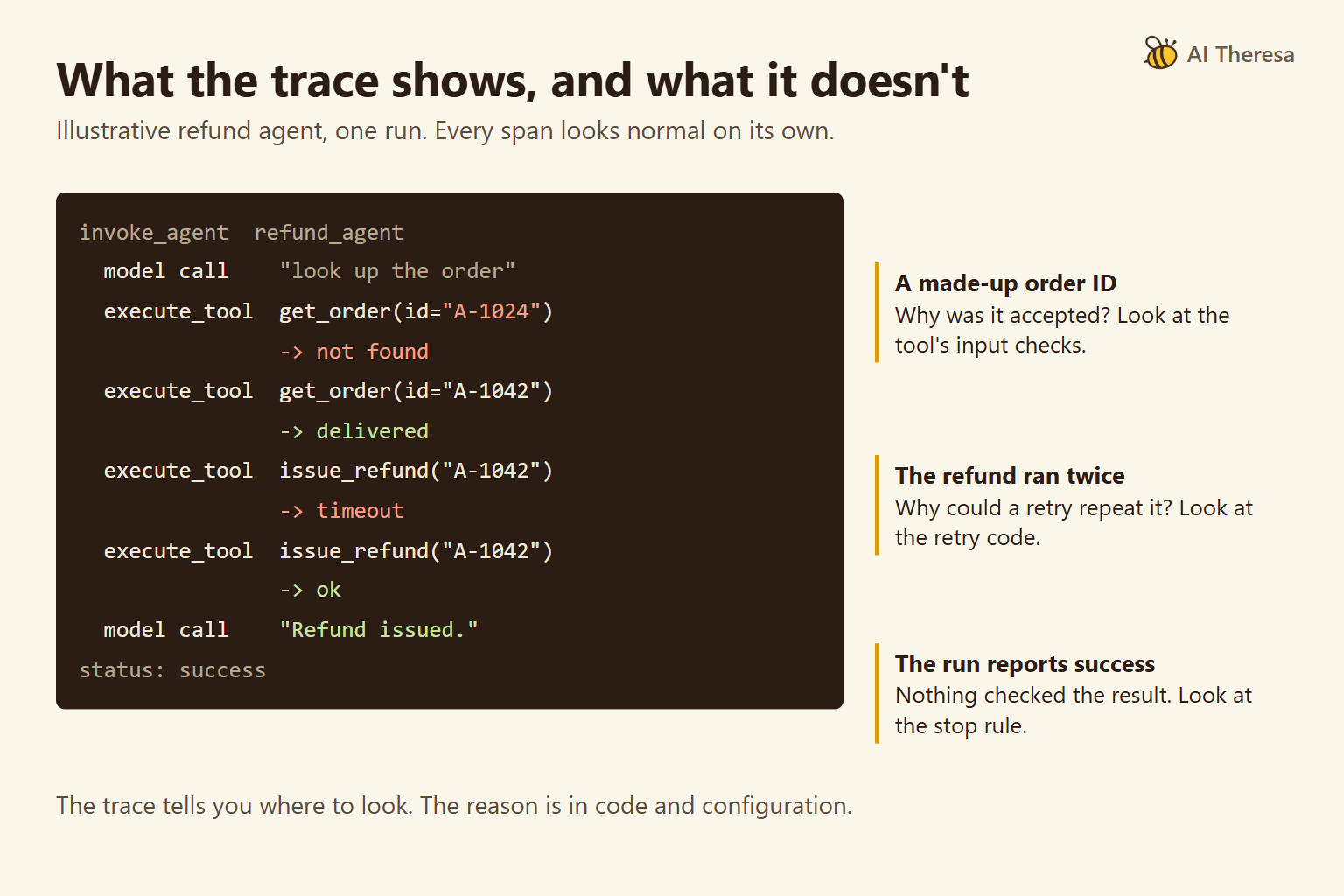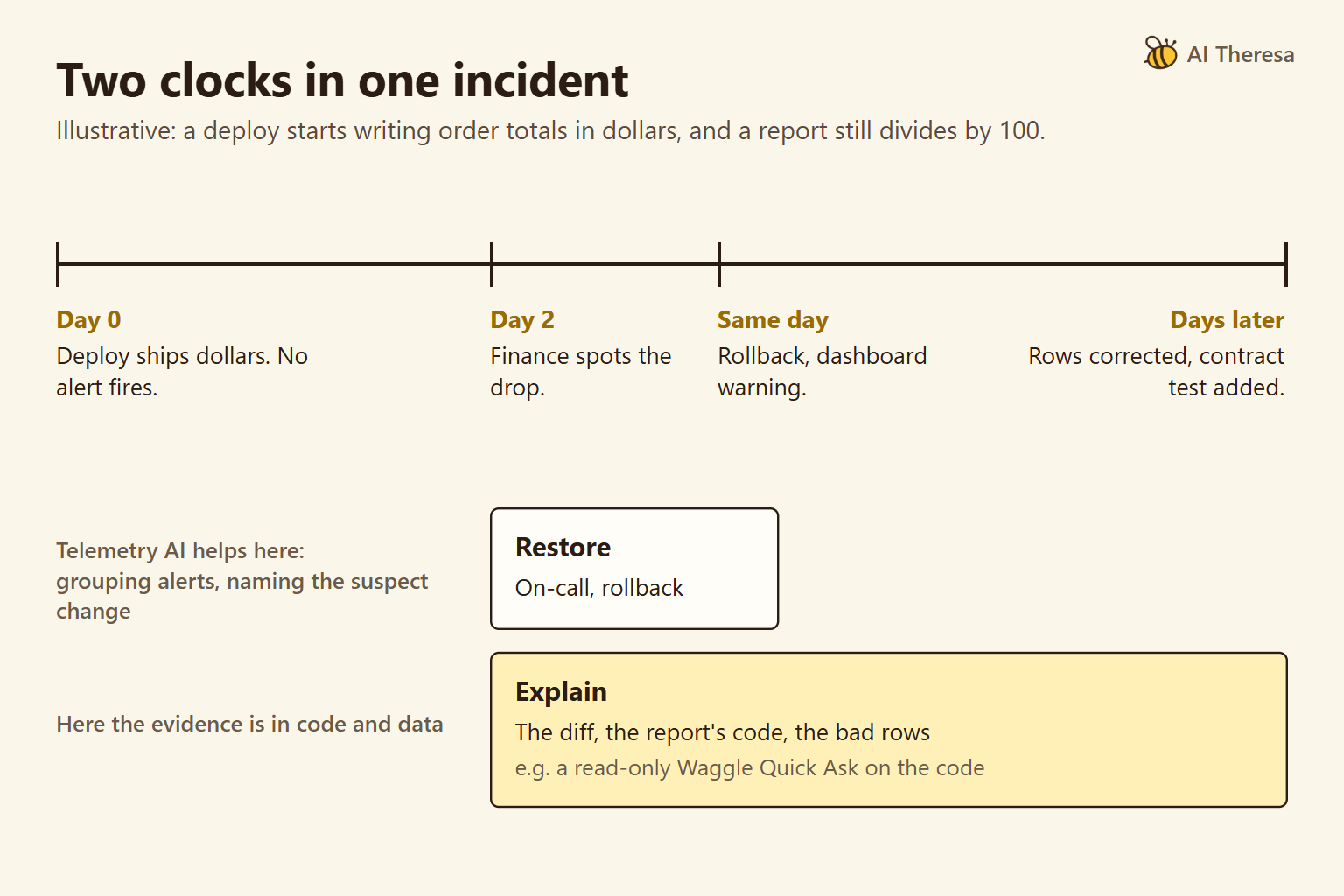
An AI forward deployed engineer works with a customer's team to make AI useful in everyday operations. The role builds on traditional forward deployed engineering, with additional responsibility for how models interpret information, generate answers, and act through connected tools.
Connecting an application to a database is familiar FDE work. When a model uses that connection, the engineer must also check whether it selects the right records and draws supported conclusions. Those decisions shape which work people can delegate and which decisions they need to retain.
This guide covers the role's responsibilities, a worked implementation, skills, and salary examples by employer and location.
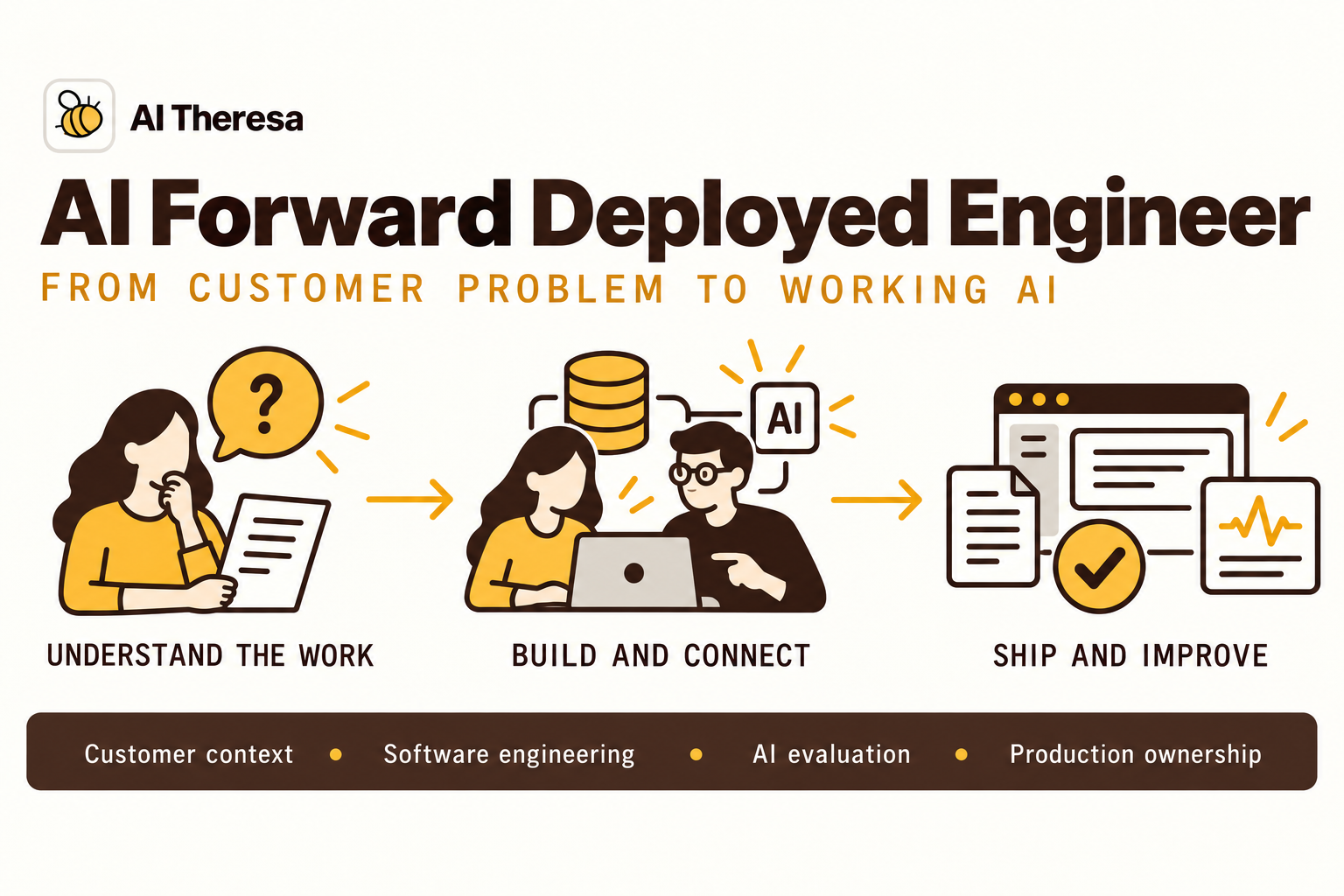
What Is an AI Forward Deployed Engineer?
"Forward deployed" describes an engineer working close to customer teams, sometimes onsite. An AI forward deployed engineer specializes in applying AI within that setting. The title refers to a person, and the boundary is flexible: an established FDE who takes on AI projects may already do this work.
Both roles require software delivery and an understanding of the customer's business. AI adds decisions about model behavior: what information to supply, how to test answer quality, and when an uncertain result needs human review. Databricks' AI FDE role, for example, explicitly requires experience with document retrieval, agents, and evaluating production AI applications.
An FDE can work for a software vendor, a services firm, or an internal team. Job descriptions matter more than titles when judging the balance of coding, advisory work, and travel.
Get Started with Theresa for FREEWhat Does an AI FDE Do?
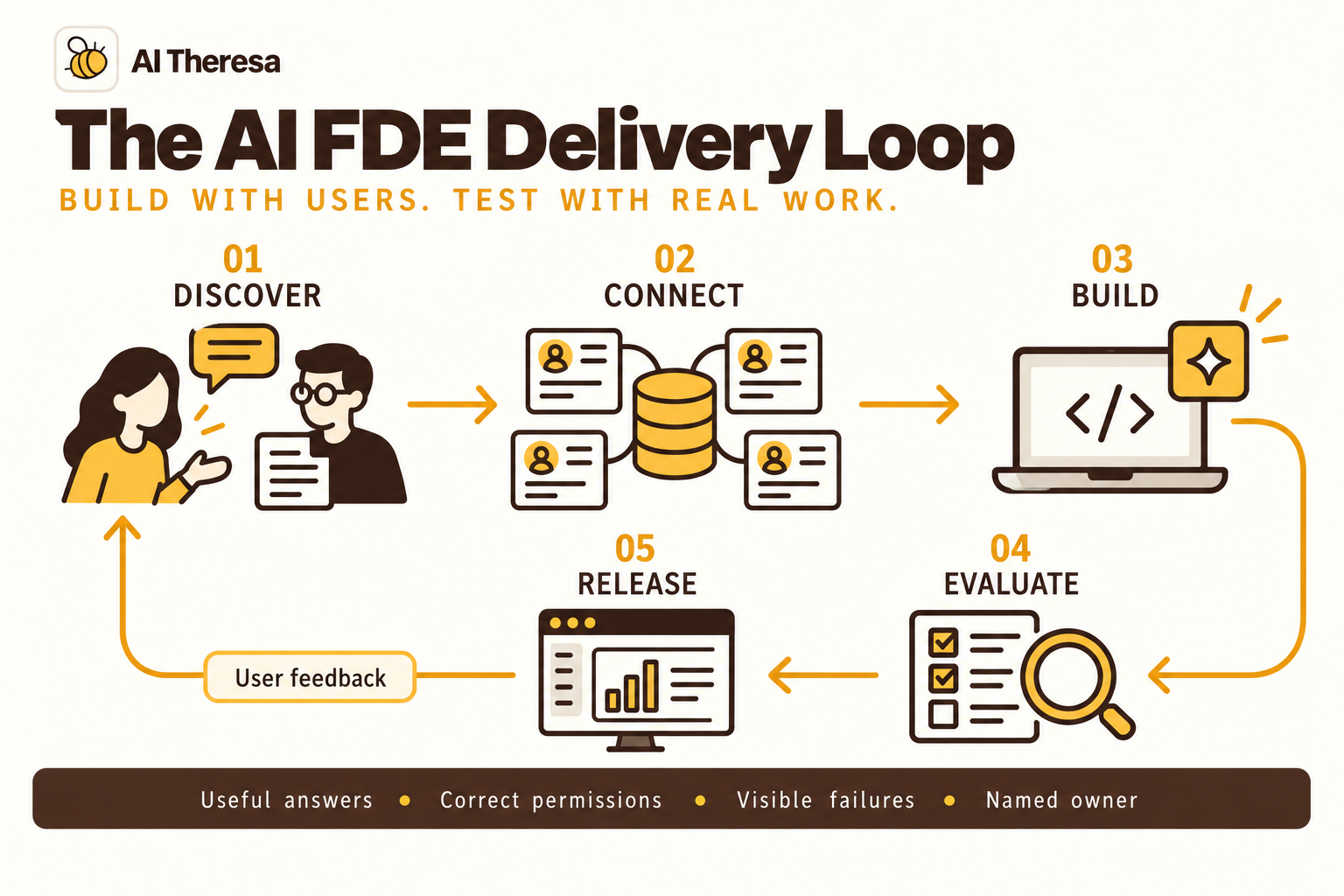
An AI FDE decides where a model will help, then builds and tests that part of the workflow. Some steps need ordinary code; others benefit from interpreting requests or summarizing documents. The engineer works with users to decide how much responsibility the application should have.
One Theresa client was creating and uploading Google Play in-app purchase items individually and translating app descriptions manually. Theresa built batch creation and upload tools with automated translation. For this client's app store optimization work, the team no longer needed to review translations manually, freeing staff time.
This combines routine automation with language processing. Batch uploads need reliable integration; translated descriptions need to preserve meaning. An AI FDE should assess each part against the client's requirements instead of adding model calls throughout the workflow.
After the prototype, the FDE keeps failures as test cases and checks response time and model costs before expanding usage.
Get Started with Theresa for FREEKey Roles and Responsibilities
Translate a business need into a delivery scope
An FDE identifies the task users need to complete and the evidence that would show improvement. That can change a broad request such as "add AI search" into a narrower deliverable: retrieve relevant incidents for a selected asset, retain the source records, and distinguish unresolved work from completed repairs.
The business owner defines success in measurable terms, such as reducing processing costs or freeing staff time. The AI FDE helps assess whether those gains justify the implementation, operating, and human review costs. Together, they decide which tasks AI can handle and where people need to stay involved.
Build the path through existing systems
The work includes APIs, data transformations, and user interfaces. For AI, the engineer also determines which records reach the model and which tools it can call. Search results must respect the user's access rights. Connecting a system does not give the model permission to use everything in it.
Diagnose and evaluate failures
A wrong answer can come from the wrong equipment match, a missing document, or a model misreading a valid source. Ordinary software tests remain necessary, but the FDE also needs examples that test meaning: did the answer describe the repair accurately? Save these cases to check later changes.
Make the implementation maintainable
The receiving team needs reviewed code, deployment instructions, and procedures for common failures. It also needs versioned prompts and evaluation cases so a model change can be tested before release. Vendor FDEs can turn recurring customer needs into shared product features or reusable connectors.
Get Started with Theresa for FREEHow AI FDEs Work
Consider a hypothetical maintenance assistant. Operators use equipment nicknames, while work orders use formal identifiers and sometimes refer to retired machines. Retrieving the wrong asset's history could produce a convincing but misleading answer.
Start with a completed investigation that experienced staff can reconstruct. Build a small path through the systems and compare its output with the planner's records, keeping this early version separate from live operational decisions.
Suppose the prototype receives "east packer, jam after changeover." Its first result might look like this:
| Step | Illustrative result | What the FDE learns |
|---|---|---|
| Resolve the equipment | Nickname maps to P-17 and retired P-09 | Ask for the asset or location before searching |
| Retrieve maintenance history | Two P-17 work orders match the symptom | Show both records with their dates |
| Inspect the resolution | One records a repair; one has no closure note | Keep the unresolved incident visibly incomplete |
| Present the evidence | Planner opens the original repair record | Make source links part of the normal interface |
If a summary describes both incidents as resolved, the FDE checks the retrieved records first. Correct records with an incorrect summary point to the model's interpretation or instructions; missing records call for a search fix.
For repeatable checks, MLflow evaluation datasets support examples collected from application traces. Save representative failures and expected behavior, then rerun them when retrieval or prompts change. Use separate cases to check whether improvements extend beyond examples used during development.
Also measure the planner's time checking answers. A larger model might produce better summaries but respond too slowly or cost too much for frequent use. Compare those trade-offs on the customer's tasks before choosing it.
AI FDE vs. Software Engineer
An AI FDE is a software engineer whose assignment is organized around a customer's implementation. A product software engineer usually works on a shared product or service. Both can write production code, investigate requirements, and contribute architectural decisions.
| Dimension | AI FDE | Product software engineer |
|---|---|---|
| Primary scope | A customer's problem and deployment | A product capability used across customers |
| Requirements | Learned through direct work with users and their systems | Shaped by product goals, user evidence, and engineering constraints |
| Integration | Adapts software to the customer's records and environment | Builds supported interfaces and reusable configuration |
| Validation | Includes local data, terminology, and acceptance cases | Covers supported behavior across deployments |
| Continuing work | Adoption, feedback, handover, and agreed support | Maintenance and evolution of the shared service |
The distinction from a traditional FDE is different. Both work around customer deployments; the AI specialization adds model evaluation and decisions about delegated work. Product engineers building AI features also need these skills, applied across their product's supported uses.
Ask employers for a recent project example to understand how much time goes to coding, demonstrations, and support.
Get Started with Theresa for FREEEssential Skills for AI FDEs
Engineering and data judgment
An FDE needs to build software well: APIs, database queries, tests, and deployable services. Python and SQL are useful foundations; TypeScript may matter when the project includes a user interface. The customer's stack determines the rest.
Data judgment includes understanding identifiers, timestamps, and missing values. A query can execute successfully while joining unrelated records or excluding unfinished work. The engineer needs to inspect those assumptions before treating its output as trustworthy model context.
Applied AI and debugging tools
Learn to find relevant records, return answers in a defined format, connect models to tools, and test the results. Also learn when a fixed workflow is sufficient. Anthropic's Building effective agents recommends starting with simple designs and adding complexity when it helps the task.
Check whether retrieved records support the answers. Training a model from scratch is a separate specialty.
Useful tools include the customer's database, a model API, version control, and a way to inspect execution. MLflow Tracing records intermediate inputs, outputs, and metadata. That can help separate an empty search result from a model that misread a returned document. Framework expertise helps when it makes this investigation easier.
Customer communication and career preparation
An AI FDE should put the client's interests first. That includes questioning whether AI is needed, explaining ongoing costs, and recommending a simpler solution when it serves the business better. A system that consumes expensive model calls without improving the client's work is a poor outcome. Ask users to walk through a difficult task, explain the trade-offs plainly, and resolve conflicting requirements with the business owner.
Build a portfolio application with setup instructions, sample records, and a failure you diagnosed and corrected. Use synthetic records when customer information cannot be shared.
For interview practice, unpack "better search": who uses it, for which decisions, and what would a wrong answer cost?
OpenAI's interview guide describes assessments that vary by team. Ask the recruiter about the format and permitted AI tools. Be ready to explain your implementation and reproduce a failure.
Salary expectations
Employer listings reviewed on November 2, 2026 give these examples:
| Employer and role | Location | Posted annual compensation |
|---|---|---|
| Palantir: Forward Deployed AI Engineer | New York, US | US$135,000 to $200,000 salary; additional compensation may apply |
| Databricks: AI Engineer, AI FDE | United States | US$182,000 to $250,208 local pay range; bonus and equity eligibility may apply |
| Anthropic: Forward Deployed Engineer | London, UK | £225,000 to £255,000 annual salary |
These vacancies are examples, not a market average or an entry-level benchmark. Databricks explicitly seeks experienced engineers. Its pay disclosure distinguishes salary from on-target earnings for commissionable roles, so confirm the structure of an offer. Compare equity, variable pay, and location separately.
Travel can change the appeal of an offer. Anthropic's linked London role lists frequent travel of 25% to 50%, a substantial commitment alongside the salary.
Get Started with Theresa for FREECommon AI FDE Use Cases
Operational knowledge and investigation
A maintenance assistant helps employees investigate prior work; other teams need knowledge shared across their agents. Theresa delivered an enterprise memory layer for a client whose resources were scattered across the organization. It connected internal knowledge, reusable instructions, and tools for internal systems so the team's agents could find and reuse them.
Document intake
A supplier-onboarding team may need to extract fields from varied documents. The AI FDE checks extraction accuracy on different layouts and builds a review screen with source references. Fixed rules can catch missing fields or duplicate identifiers before someone accepts the result.
Analysis inside existing applications
A business user might ask why a metric changed. The AI FDE checks whether generated queries use the correct definition and comparison period. Valid SQL alone does not establish that a query answers the business question.
In a related data-access project, a Theresa client's analysts repeatedly queried BigQuery throughout the day, making reporting slow and costly. Theresa built a dashboard with optimized queries and scheduled data fetches, giving analysts faster, cheaper access and making the data easier for the client's agents to use. Here, improving data access supported AI use while solving an existing reporting problem.
Get Started with Theresa for FREEBenefits of AI FDEs
A good AI FDE service can help a traditional business become AI-native over time. It connects company knowledge and tools, redesigns everyday workflows, and ultimately helps shape the organizational structure around AI. People take on clearer responsibilities for directing the work, overseeing systems, and making decisions that require human judgment.
For example, a supplier-onboarding team could move from manually entering every document to reviewing exceptions while AI prepares routine records. A process owner would maintain the acceptance rules, with engineering supporting the system. Leaders decide how responsibilities change; the FDE helps establish what the technology can reliably take on.
That change needs evidence: less time completing the task, fewer corrections, and manageable operating costs. Include time spent checking answers. A single successful deployment is a starting point for wider adoption.
Get Started with Theresa for FREEChallenges of AI FDEs
Customer proximity creates competing demands. An engineer may discover broken source data, a missing product feature, and a training problem during the same project. Agree which issues block delivery and which belong with another team, or the engagement can expand indefinitely.
AI behavior can change when models, prompts, or source documents change. A new search setting might find recent incidents while missing older ones. Track those failures separately so an overall score does not hide worse results on important cases.
Travel and frequent meetings can also crowd out development. Reserve time for implementation and avoid making one FDE the only escalation path. Customer relationships become fragile when every answer depends on one person's availability.
Workflow changes need staff involvement. If employees must quietly correct every AI result, apparent automation can conceal extra work. Discuss those corrections openly before expanding the system's responsibilities.
Get Started with Theresa for FREEHow to implement an AI FDE
Implementing the FDE model means giving an engineer a delivery responsibility and the access needed to fulfill it. The role cannot compensate for a project with no business owner or no route to production.
- Choose the problem and owner. Select a recurring task whose users can explain current failures and review proposed changes.
- Define the engagement. An employee can support continuing work; a vendor or FDE as a Service provider can deliver a defined project. Specify code ownership and the expected operating arrangement.
- Provide the working context. Arrange access to records, source-system owners, users, and a customer engineer who can maintain the implementation.
- Agree on acceptance. Compare results with representative completed cases. Include review effort and operating cost, rather than measuring generation speed alone.
- Exercise the handover. Have the receiving team perform a routine update or investigate a failed run while the FDE is still available.
Start with one production workflow. Before expanding, agree who maintains its business rules, who handles exceptions, and how employees learn the new process. Wider organizational changes should follow evidence that the workflow works reliably, with business leaders responsible for staffing decisions.
For software defects that obstruct the project, Waggle provides evidence-backed audits of code and data. Domain experts still need to establish whether the business definitions and resulting answers are correct.
Get Started with Theresa for FREEFuture of AI Forward Deployment
Deployment skills are receiving explicit investment. In October 2026, Anthropic announced Claude Frontier Academy, including a Frontier Deployed Engineer Residency with practical assessment and a 12-week deployment project. It is one example of formal training for deployment work; it does not establish how salaries or hiring will change.
AI-assisted coding may reduce some implementation effort. The customer still needs someone to decide where models are useful, investigate unreliable behavior, and help teams adopt new ways of working. Using a coding assistant alone does not make an engineer an AI FDE.
For candidates, a deployed application with documented failures demonstrates those skills. For employers, the longer-term opportunity is to develop teams that can run and improve AI-supported operations themselves, with clear authority over the systems and decisions they depend on.